
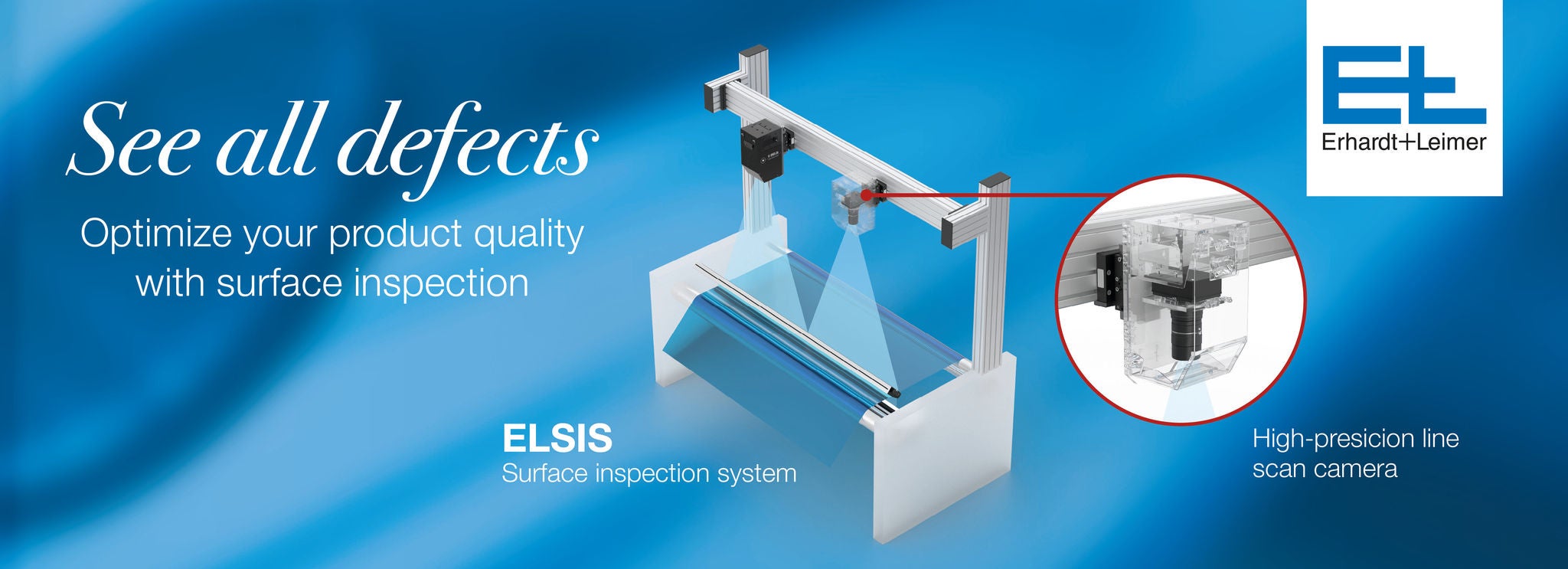
Less waste, more transparency: ELSIS ensures highest product quality
Quality requirements for production on moving webs have increased in almost all industries – from paper and films to applications in food, pharmaceutical, battery, or hygiene environments. Without camera-based inspection, continuous monitoring of the material surface can hardly be ensured. The goal is 100% inspection to detect production deviations at an early stage and minimize material waste.
Stand: April 2026
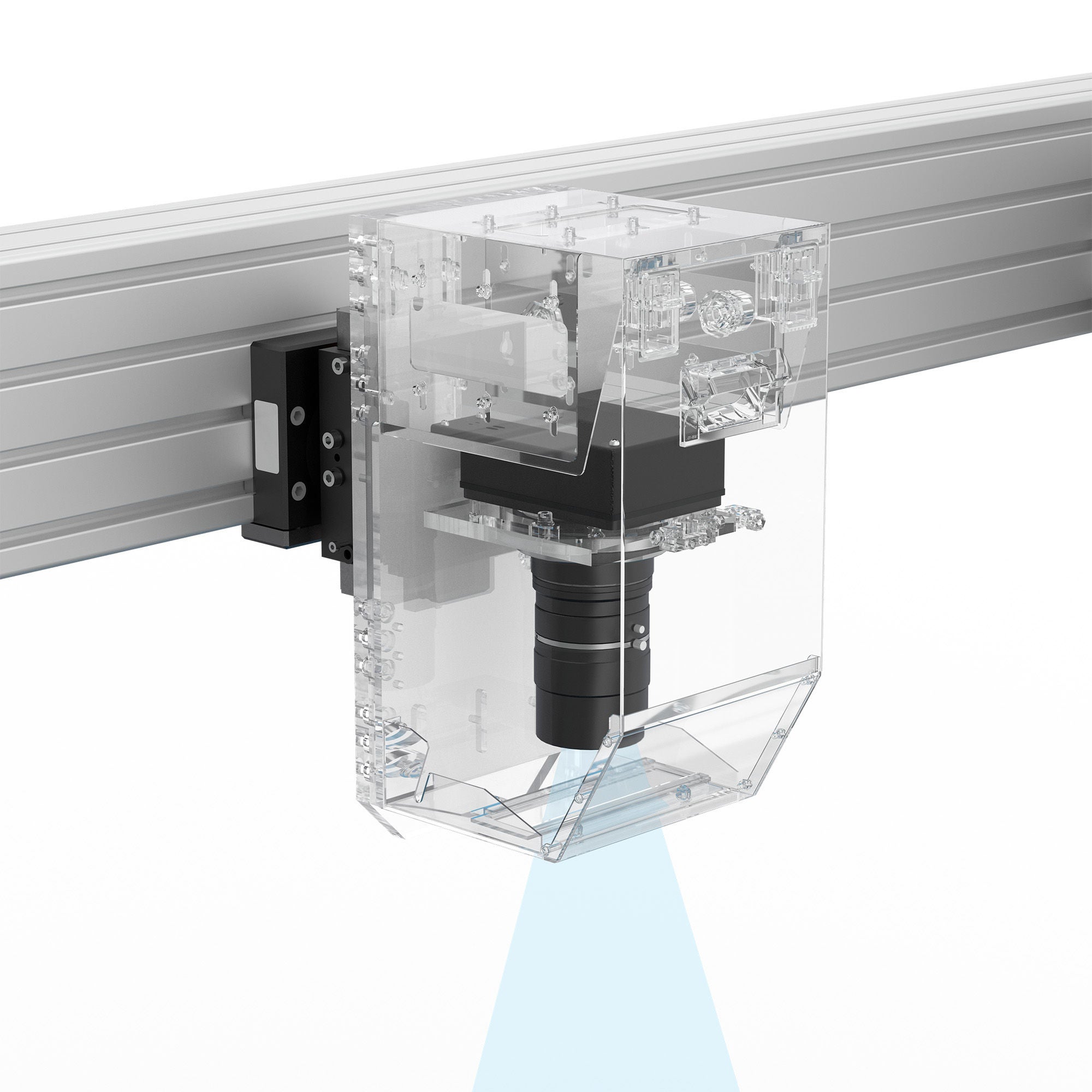
ELSIS is a camera-based surface inspection system for moving webs that enables 100% inspection to detect production deviations at an early stage. It uses highly sensitive line scan cameras, works with defect classes for alerts, marking, and statistical evaluation, and the flexible ELSIS I/O control system can be used to integrate signaling devices, marking units, and even the complete machine control. Customer-specific project planning, scaling via additional cameras or complete camera lines, and sample examinations including a feasibility report support the initial system design. The operating interface combines production and inspection data, reel logs, and defect images and provides 100% logging as well as statistical functions. Adjustable LED light transmitters ensure particularly reliable defect detection.
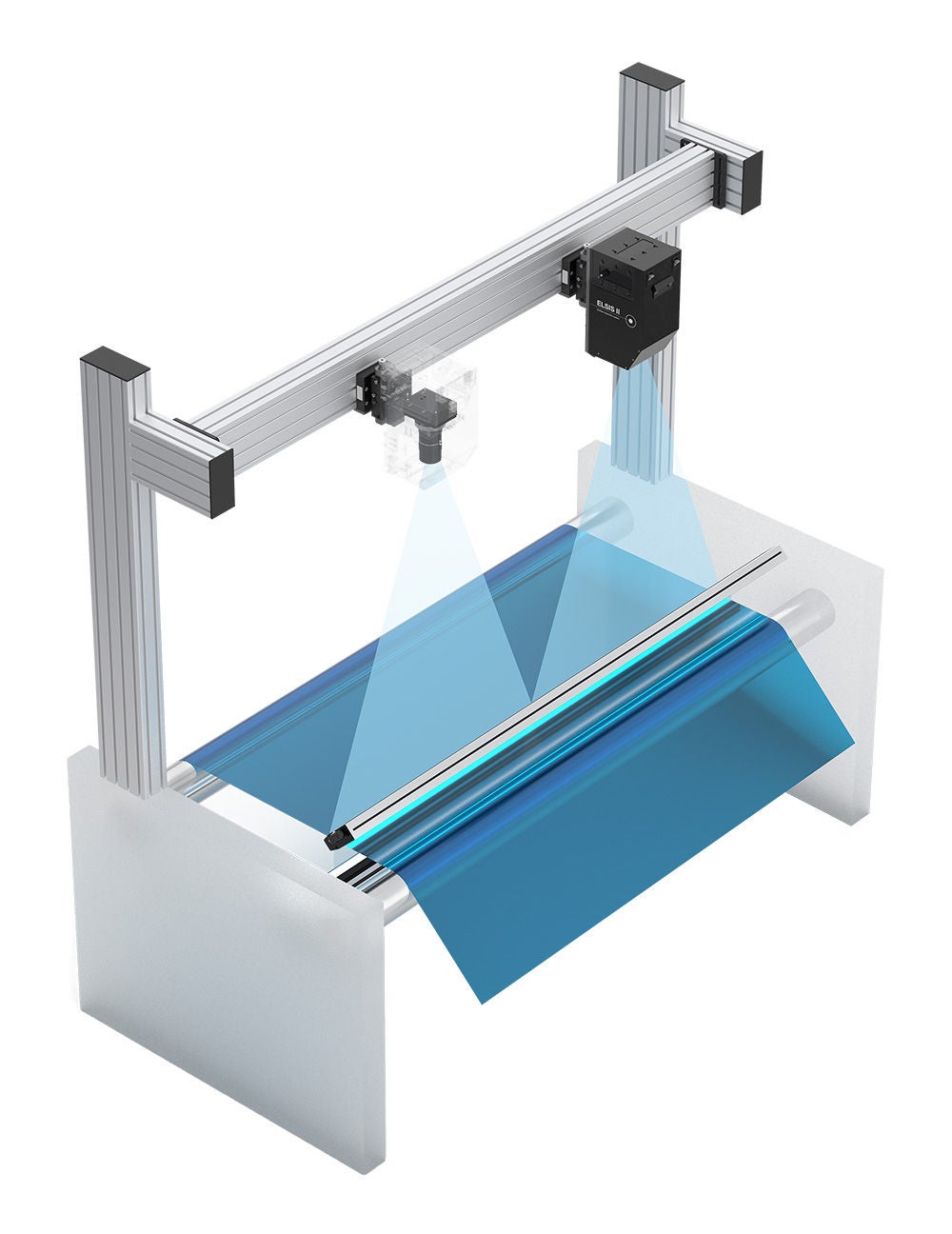
How ELSIS detects defects and safeguards the process
Erhardt+Leimer’s surface inspection system ELSIS uses highly sensitive line scan cameras for seamless detection of production defects on moving webs. These cameras detect every deviation and immediately alert the operator if a defect is recognized. Typical defects for an inspection with ELSIS range from soiling, damage and holes to bubbles and specks, as well as creases lengthways and crossways and doctor blade and streak defects. Corresponding defect classes can be stored in the system as basis for alerts, marking, and statistical evaluation. The automated control of signaling devices such as lamps, horns, and marking units and even the complete machine control can be implemented using the flexible ELSIS I/O control system. To further maximize user-friendliness in practice, ELSIS also works with recipes. Simple recipe templates are provided in the system and can be used, expanded, and optimized. To ensure the best possible adaptation to customer requirements, the initial parameterization is usually conducted together with an E+L technician.
Project planning and scalable resolution
Every ELSIS system is specifically planned for the customer. From consultation and integration through to aftercare, E+L experts ensure that the system is matched precisely to customer requirements. For example, sample examinations in test laboratories, including a feasibility report based on individual defect samples, are possible. If higher resolution requirements arise later, ELSIS can be expanded without major effort by retrofitting additional cameras or complete camera lines. This makes ELSIS highly future-proof without incurring high follow-up costs.
User interface and traceability
The user-friendly operating interface provides optimal support for production workflows. Production data and current inspection status, reel logs with a defect overview, defect images, and classification information are collected and displayed in a straightforward panel. A configurable log view makes it easier to identify defect distribution and defect frequency. For complaints, ELSIS logs all inspection processes for 100% traceability and additionally provides comprehensive statistical functions. Integration into the customer’s network with system access for other team members, for example in quality assurance or production management, is also supported.
Application focus: films and pharmaceutical packaging
Worldwide, around 50% of all film packaging produced is intended for direct contact with food. ELSIS offers user-friendly solutions for this sensitive sector to meet the particularly rigorous market requirements. Many functions in the ELSIS system are therefore specially tailored to film production. Requirements are even stricter in the pharmaceutical industry. Because of the stringent hygiene standards there, 100% surface inspection is essential. Due to its high resolution and sensitivity, ELSIS is predestined for these markets. Thanks to its 100% logging of all defects and all process interventions, whether they are automated or by the operator, they can be analyzed and traced at any time, if there are subsequent complaints.
Lighting as a key parameter
The light source is an essential and decisive part of a surface inspection system, because the type of lighting, lighting color, intensity, and lighting angle can determine whether a defect is visible or remains hidden. In some situations, defects are only detected using transmitted light or a combination of lights. In the ELSIS system, LED light transmitters with high illuminance, different color spectra, different lenses and diffusers, and LEDs with long-term stability are used. The light transmitters are available in modular length and feature temperature monitoring to ensure a constant temperature. The lighting profile can also be adjusted via Ethernet.
ELSIS helps companies make surface quality transparent along the entire production line and reliably detect, classify, and trace defects. The extensive data collected and its detailed evaluation simplifies root-cause analysis, especially in sensitive applications such as food and pharmaceutical packaging. This makes surface inspection a stable building block for reliable, reproducible quality in ongoing productions.
Frequently Asked Questions (FAQs)
ELSIS is a camera-based surface inspection system for material inspection on moving webs. The inspection system detects production deviations and material defects, safeguarding the quality of the manufactured goods.
Quality requirements have increased in many industries. To ultimately be able to provide a reliable quality commitment, the goods must be checked with a 100% inspection. Only then defects can be detected at an early stage so that countermeasures can be taken. In addition, documentation of production runs is becoming increasingly important in order to trace complaint claims and optimize processes. A camera-based system meets both requirements in one go.
ELSIS uses highly sensitive line scan cameras that detect deviations and, in the event of a defect, alert the operator via signal lamps or mark defects directly.
Depending on the application, typical defects include soiling, damage, inclusions, insects, holes, bubbles, specks, chatter marks, creases lengthways and crossways, as well as doctor blade and streak defects.
Defect classes structure detected defects and serve as the basis for alerts, marking, and statistical evaluation.
Recipes are inspection presets. ELSIS provides industry-typical recipe templates that can be expanded and optimized. The individually suitable settings are typically developed together with an E+L technician and conveyed as part of training (including support after commissioning, for example via remote service).
Using the flexible ELSIS I/O control system, signaling devices such as lamps and horns as well as marking units can be controlled, or even the entire machine control can be implemented.
Using the flexible ELSIS I/O control system, signaling devices such as lamps and horns as well as marking units can be controlled, or even the entire machine control can be implemented.
Using the flexible ELSIS I/O control system, signaling devices such as lamps and horns as well as marking units can be controlled, or even the entire machine control can be implemented.
Lighting is a key parameter: type, color, intensity, and angle often determine whether defects become visible or remain undetected. Some defects are only detectable using transmitted light or a combination of lights. In the ELSIS system, LED light transmitters with high illuminance, different LED colors, a narrowband and long-term stable spectrum, modular length, focusability, temperature monitoring, and a lighting profile that can be adjusted via Ethernet are used.