
EL.TAG: RFID tag preassembly for reliable tire traceability
Tire traceability and Digital Product Passports
With the upcoming introduction of the Digital Product Passport for consumer goods in the European Union, tire traceability is becoming increasingly relevant for manufacturers, vehicle producers, and recycling networks. Tires are expected to carry unique identifiers that remain functional throughout manufacturing, use, and recycling processes. This creates the requirement for reliable integration of digital identification technologies into tire production without compromising process stability or product quality.
June 2026
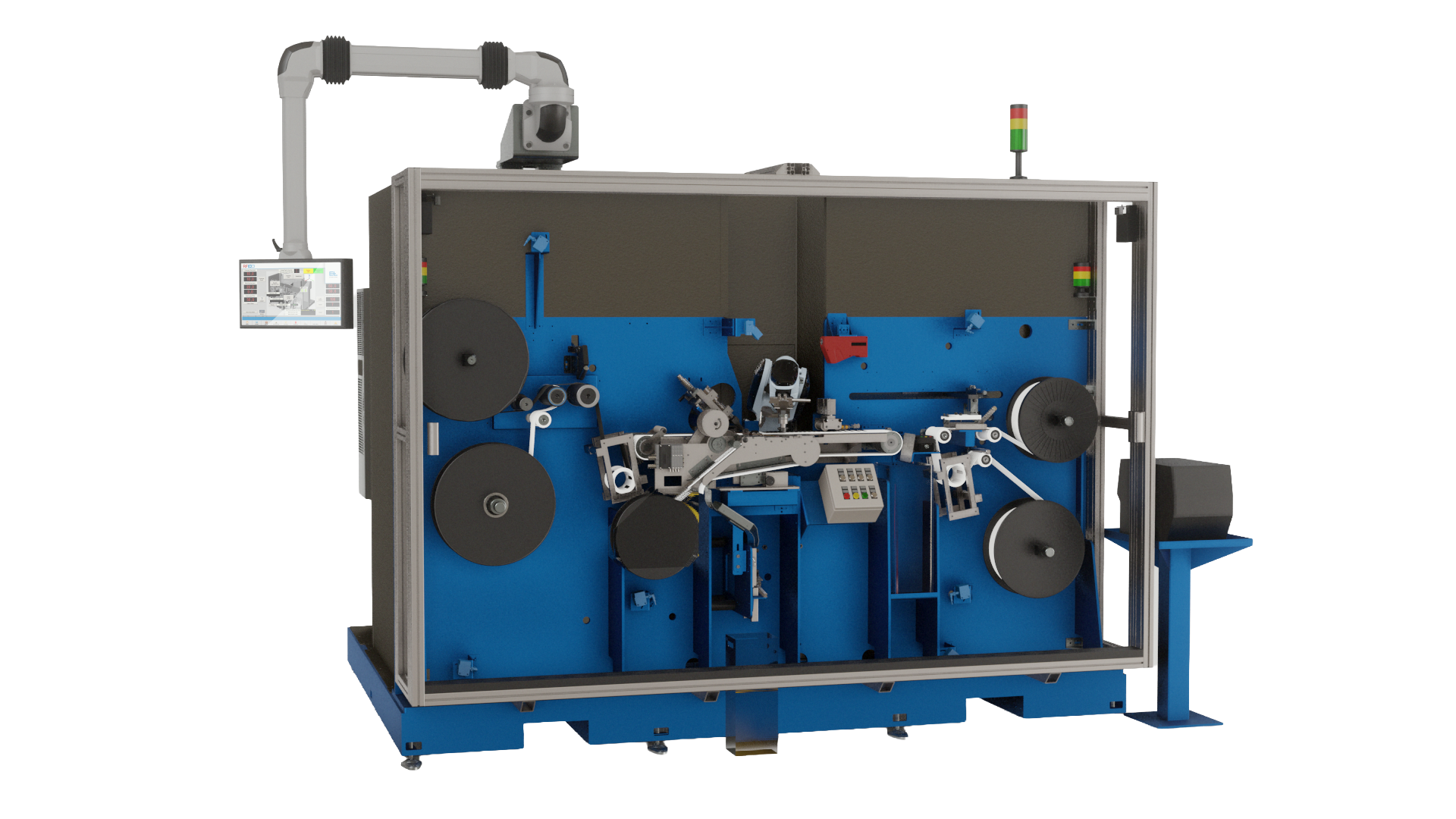
The EL.TAG machine from Erhardt+Leimer automates the preassembly of RFID rubber tags for tire manufacturing. The system produces finished RFID tags in a controlled process environment and prepares them for downstream integration into tire building operations. The machine combines automated material handling, RFID integration, inspection technology, and functional verification within a compact production system.
Controlled RFID tag manufacturing process
A common approach to tire identification is the integration of RFID technology into rubber-based carrier patches. Instead of placing sensitive RFID inlays directly into the green tire, the RFID chip is encapsulated between rubber layers that are compatible with curing and later tire use. This encapsulation protects the chip, maintains RFID readability over time, and creates a stable interface for data exchange throughout manufacturing, logistics, service, and recycling.
The industrial implementation of this concept requires highly controlled handling processes. Rubber materials are sensitive to contamination, deformation, and tension, while the RFID chip positioning must remain precise and repeatable during production. The EL.TAG machine was developed specifically for these requirements.
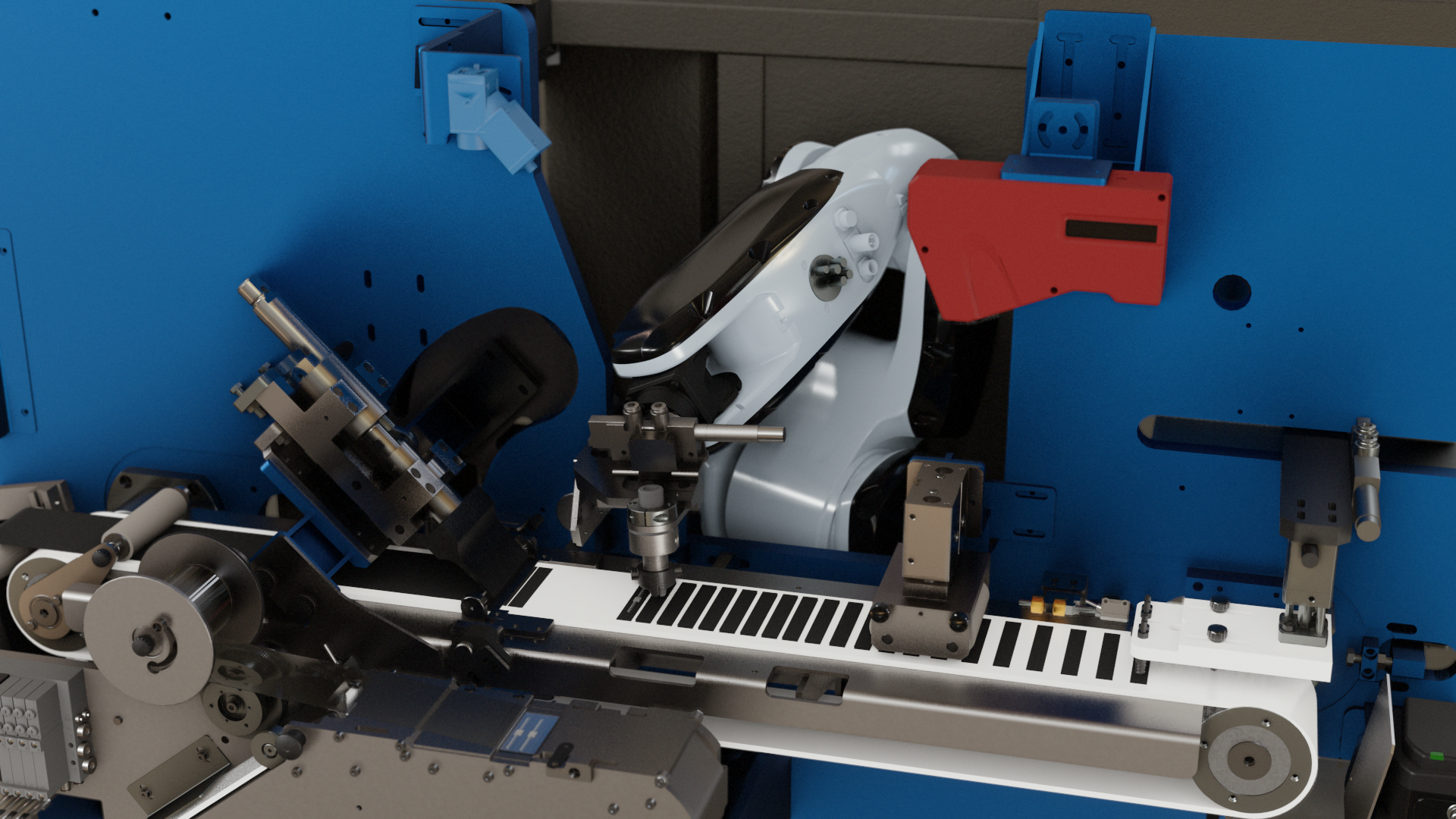
The process starts with feeding a rubber strip into the machine. An ultrasonic cutter trims the material to the required length. A robotic handling system then assembles a layered structure consisting of a rubber strip, an RFID chip, and a second rubber strip. After cold lamination, a pick-and-place unit transfers the finished RFID tag onto a plastic carrier that is wound into a roll for transport to the tire building station.
To support precise downstream placement, the system operates with minimal liner tension. This reduces stretching and misalignment effects that could influence chip position or overall tag geometry during further processing.
Integrated inspection and functional verification
Because the RFID tag becomes a permanent functional identifier inside the tire, quality monitoring and verification are essential during preassembly. Defective RFID tags cannot be replaced after tire curing. For this reason, the EL.TAG machine integrates multiple inspection and verification systems directly into the production process.
A 2D camera system monitors critical handling operations during assembly. In addition, a 3D camera system measures the geometry of the finished RFID tag, verifies the chip position within the rubber layers, and checks complete encapsulation without air inclusions. An RFID reading station additionally confirms the functionality and readability of every RFID tag before release for tire production.
The combination of dimensional inspection and RFID functionality testing helps prevent non-functional identifiers from entering downstream tire manufacturing processes.
Stable production and process integration
Cycle time performance is a key requirement for automated RFID tag preassembly. The EL.TAG machine is designed to complete the cutting, placement, lamination, and transfer sequence within only a few seconds while maintaining the placement tolerances required for reliable RFID scanning throughout the tire value chain.
For stable continuous operation, the system is designed as a self-contained production unit with recipe management, online process monitoring, and an operator interface positioned for accessibility. Optional modules include scanner and labeling systems as well as finished bobbin identification for linking physical rolls with digital production records. Sliding door safety concepts allow service access while maintaining controlled machine operation.
Automated RFID preassembly for tire manufacturing
As Digital Product Passport initiatives continue to develop, tire manufacturers are evaluating process architectures and identification technologies that can support future transparency requirements without disrupting existing production lines.
The EL.TAG machine from Erhardt+Leimer provides one possible solution through automated RFID tag preassembly. The system isolates sensitive RFID chip handling in a dedicated production cell, produces rubber-compatible RFID tags with verified functionality, and supplies standardized RFID tag material for downstream tire building and related data systems.
Frequently Asked Questions (FAQs)
The EL.TAG machine automates the preassembly of RFID rubber tags for tire manufacturing and prepares them for downstream integration into tire building processes.
RFID rubber tags are used to uniquely identify and track tires throughout their lifecycle, from manufacturing and use to end-of-life processing.
The RFID chip is encapsulated between rubber layers that are compatible with tire curing and later tire use. This protects the chip from mechanical and environmental influences.
The sensitive RFID chip is protected and can be positioned more easily on the tire building machine. The EL.TAG manufacturing process ensures that there are no air inclusions between the RFID antennas and the rubber, which is important for achieving a longer range.
The system combines 2D and 3D camera inspection with RFID functionality testing. Geometry, chip position, encapsulation quality, and RFID readability are verified during production.
Minimal liner tension reduces stretching and misalignment during processing, helping to maintain accurate chip positioning and stable tag geometry. In addition, minimal liner tension ensures that, when the roll of tags is unwound from the applicator on the tire building machine, the tags do not stick to the bottom side of the liner, which could prevent the applicator from gripping them.
Defective RFID tags cannot be replaced after curing. Therefore, every RFID tag is verified before release for tire production.
EL.TAG supports a standardized, reliable process for integrating digital identifiers into tires and ensures that only functional RFID chips are installed, thereby establishing a technical foundation for future transparency and traceability requirements.